The transport of goods is not limited simply to the movement of products from one place to another; it also involves the management of confidential data and documents along the entire supply chain, which must be protected, and this is why digital corridors are born: mapping international trade.
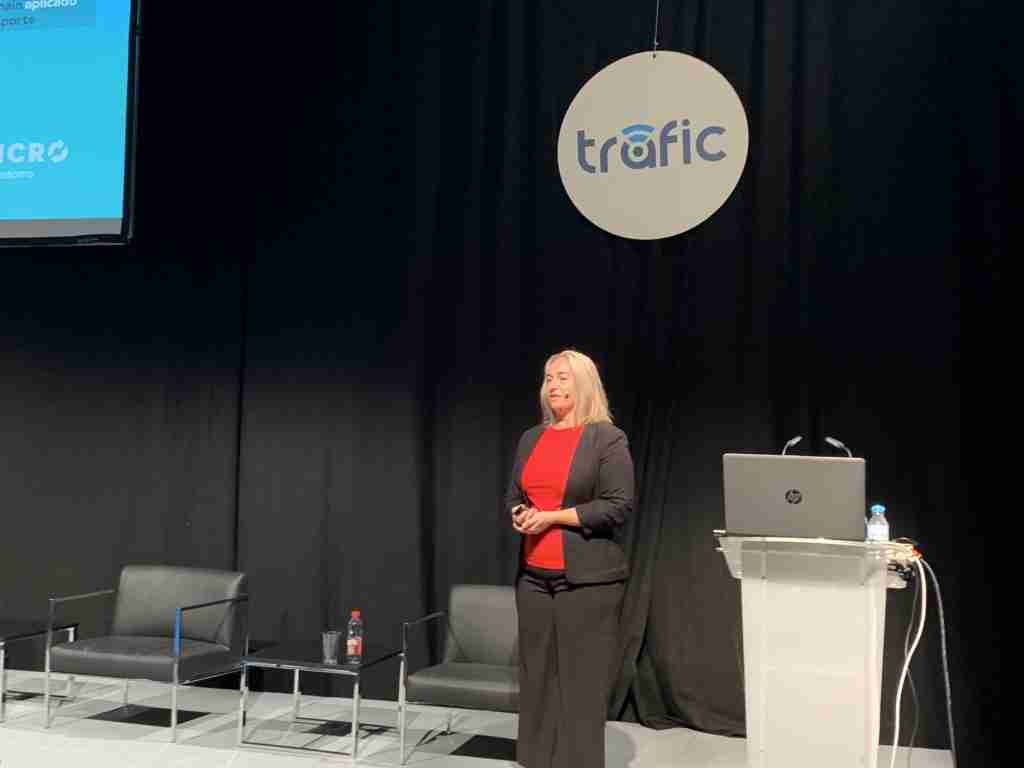
To fulfill this purpose, there are virtual platforms that optimize administrative management while safeguarding information and promoting a more efficient and sustainable service. «Digital brokers arise from the need to coordinate all the actors involved in the supply chain within the same digital environment, using technologies such as Blockchain to guarantee the security of documents,» explains Cristina Martín Lorenzo, director of Usyncro, a Spanish initiative with extensive experience and recognized by UNCTAD (United Nations Conference on Trade and Development).
In this way, manufacturers, carriers, customers, banks, customs agents, freight forwarders and authorities in the different countries involved in the transit of goods can share information securely – maintaining control over the data – speeding up processes, reducing the risk of fraud, and eliminating the use of paper and unnecessary travel.
A radical change
Although digitalization is advancing globally, the transition is not easy, especially in traditional sectors that require profound changes. «Adapting to digitization involves considerable effort. Logistics and transport have traditionally operated with paper documents and legislation to facilitate the change is not yet fully implemented. However, there are already European regulations that are leading the way, such as the CSRD or specific requirements for the transport of certain products (such as CBAM), in order to manage everything in a more sustainable way,» says the expert.
In this context, Usyncro proposes adding functions that support the evolution of customs management in Europe and help overcome the challenge of adopting new technologies. «Many professionals fear being replaced by technology, when in fact, we are looking to increase the value of human labor,» he assures. Far from being simply a change of format, digitalization seeks to create a global environment in which technologies such as Artificial Intelligence (AI), Machine Learning, Blockchain and robotics are already part of the present.
These technologies, especially Blockchain, offer supply chains not only document integrity, but also traceability and decentralized access to data. «Combined with AI, it makes it possible to automate many repetitive processes and detect errors quickly, thus reducing the chances of fraud,» adds Martin Lorenzo. In this way, buyers, sellers and other stakeholders can authenticate their transaction data, resolving procedures that would otherwise require between 20 and 50 steps, simply by uploading a digital document and sharing it in a common virtual space.
High impact on risk management
Digital brokers allow information to be exchanged in a secure environment, always maintaining control of the data and extending access to authorities in different countries. «It is important to remember that logistics handles very sensitive and strategic data, so it is crucial that each actor has the certainty that the shared documents have not been altered,» they point out from Usyncro. The security and transparency provided by Blockchain have made it possible to offer complementary services to all actors in the supply chain, coordinating the documentation of each operation through a single, distributed and synchronized record, accessible and verifiable by all parties involved, including official institutions such as customs or the tax agency.
In addition, «the guarantees offered by this technology are useful for taking out insurance on goods or financing, improving conditions or premiums thanks to transparent and validated documentation. Similarly, traceability and the possibility of creating predictive models for global risks or problems in the supply chain represent a significant advance in the field of insurance and the evaluation of certain cargoes,» says Martín Lorenzo.
Progressive development How has it evolved and what were the milestones that led to UN recognition?
The development of this technology has gone through several phases, with tests of different scales to demonstrate its effectiveness. Usyncro ‘s example began in 2018, based on the experience of its CEO, Cristina Martín, who started a project focused on the customs area that in 2021 took on a more comprehensive approach. «At that time, this SaaS platform (open, flexible and interoperable with other technologies) was born, with the aim of bringing disruptive technologies such as AI and Blockchain to companies of all sizes,» with the additional purpose of «reducing the carbon footprint through the digitization and connectivity of all actors in the supply chain, contributing to the Sustainable Development Goals (SDGs),» says the founder. «Interoperability between platforms and technologies is part of our DNA to achieve a more secure, agile and sustainable supply chain management,» she concludes.